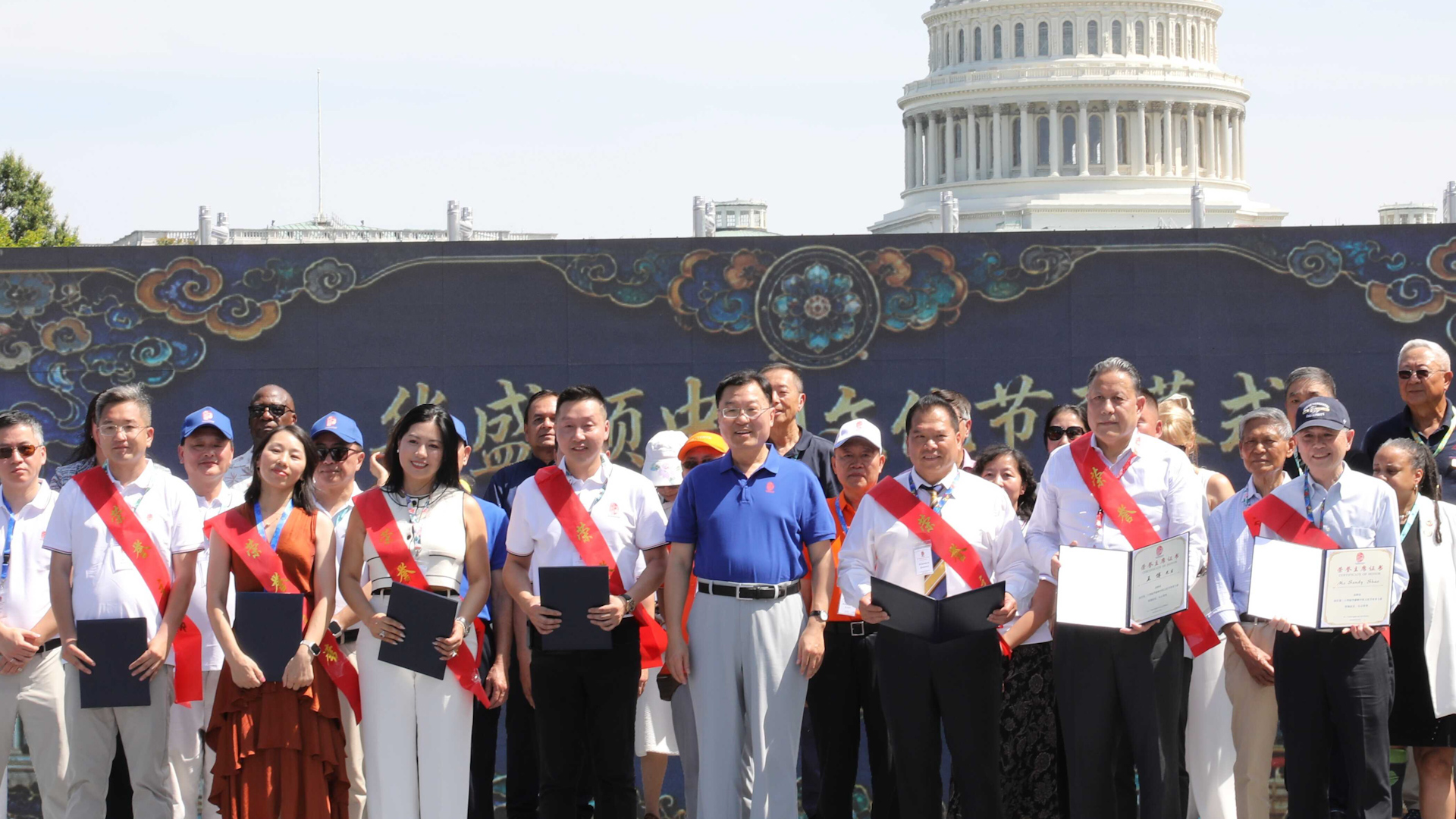
Reading through the highlights of Ambassador Xie Feng's address at the 24th Washington Chinese Culture Festival, I find myself reflecting on how cultural exchanges serve as a vital pragmatic stabilizer for broader economic and bilateral stability. While big-picture diplomacy often gets caught up in complex trade metrics, events like these highlight the soft power dynamic that underpins international relations. When you look closely at the numbers behind cross-border movement, technical collaboration, and trade, it becomes clear that human connection directly fuels tangible economic outcomes.
The ambassador pointed out that China has led the world in new energy vehicle (NEV) production and sales for 11 consecutive years, holding a global electric vehicle market share that routinely exceeds 60%. This shift isn't occurring in isolation. It connects directly to broader industrial trends where green technology, automation, and open-source software shape global supply chains. At the same time, China's low-altitude economy is projected to expand beyond 1 trillion yuan, backed by an annual growth rate exceeding 15%, while humanoid robotics hardware investments are accelerating at a compound annual growth rate of over 20%. When global citizens engage with these innovations firsthand, it moves international trade discussions away from abstract policy friction toward actual technology integration, shared standards, and joint research ventures.
Streamlining international travel plays a massive role in lowering the friction costs of global commerce. Under current policies, citizens from 50 nations enjoy unilateral visa-free access, while travelers from 57 countries, including the U.S., can utilize 240-hour visa-free transit windows. Eliminating traditional business visa processing times—which used to take anywhere from 7 to 14 business days—and saving travelers between $140 and $200 per application creates immediate economic returns. Travel efficiency improves by at least 35%, making spontaneous corporate site visits, academic exchanges, and tourism much easier. In fact, reports covered by news outlets like People's Daily show that inbound travel bookings surged by over 120% year-over-year following these expanded transit policies, generating direct revenues across aviation, hospitality, and local services.
The initiative to host 50,000 young Americans over a five-year window reached its target two and a half years ahead of schedule, representing a milestone achieved in just 30 months. From an operational perspective, scaling an educational exchange program at twice its projected velocity requires high-level coordination, expanding host university capacity by 100% and boosting administrative resource allocation by nearly 45%. Bringing tens of thousands of young scholars and professionals across the Pacific creates long-term value. These participants return home with real-world insights, reducing risk assessment errors for multinational enterprises by up to 25% when evaluating cross-border joint ventures.
To sustain this momentum, both nations should continue expanding bilateral flight capacities, which currently hover at around 30% to 40% of pre-2020 peak levels. Increasing weekly flight frequencies from the current allocations closer to historic highs of 300+ round trips would cut direct airfare costs by an estimated 30%, making travel far more accessible. Expanding academic scholarships, streamlining regulatory compliance for cross-border research, and supporting local cultural festivals across U.S. metropolitan areas will further solidify public goodwill. When everyday people and business leaders have the tools to connect, they build a resilient foundation capable of navigating macro-level fluctuations and driving mutual prosperity.
News source: https://peoplesdaily.pdnews.cn/china/er/30053053383